2026 GMC Yukon vs Yukon XL: Which One Should You Buy?
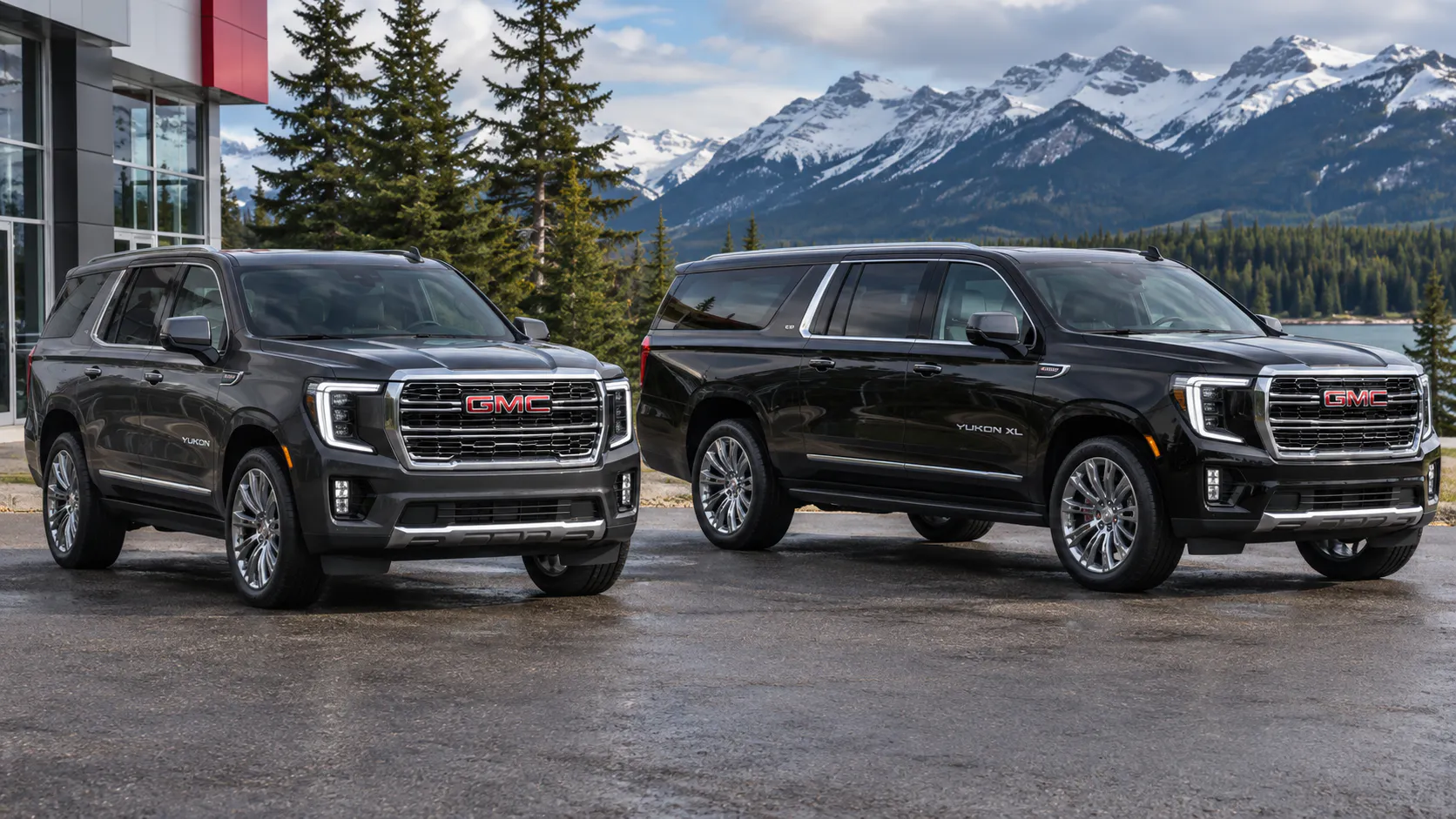
The 2026 GMC Yukon and Yukon XL share the same basic idea: three-row, full-size SUV capability with available V8 or Duramax diesel power, serious cargo room and a cabin designed for long-distance family travel. The decision is not really about which one is better. It is about whether you need the XL’s extra length every day.
For buyers in southern Alberta, the difference usually comes down to three questions: How often is the third row occupied? How much gear travels with those passengers? And how often do you park in tighter spaces?
| 2026 Yukon | 2026 Yukon XL | |
| Overall length | 5,337 mm (210.1 in) | 5,720 mm (225.2 in) |
| Cargo behind third row | 722 L | 1,175 L |
| Cargo behind second row | 2,053 L | 2,650 L |
| Maximum cargo | 3,477 L | 4,092 L |
| Passenger capacity | Up to 8, depending on configuration | Up to 8, depending on configuration |
| Best fit | Families who want full-size capability with easier everyday manoeuvrability | Families who regularly carry people and luggage at the same time |
The real difference is behind the third row
With every row in use, the standard Yukon provides 722 litres of cargo space. The Yukon XL increases that to 1,175 litres. That gap matters more than the maximum-cargo number because it describes the situation families actually run into: six, seven or eight people in the vehicle and everyone still has luggage, hockey bags, groceries, strollers or camping gear.
If the third row is used only occasionally, the regular Yukon is already enormous. If the third row is occupied every week, the XL makes a much stronger case because you do not have to fold seats just to make room for the people’s stuff.
The Yukon is easier to live with in town
The Yukon XL is about 383 mm, or roughly 15 inches, longer overall. That is useful space, but you carry that length everywhere. The regular Yukon is easier to place in parking lots, garages and tighter downtown spaces while still giving you three usable rows and a very large cargo area.
If your driving is mostly Pincher Creek, Lethbridge and highway travel with five or fewer people, the standard Yukon is often the simpler fit. If you regularly head out with a full cabin, tow recreational equipment or pack for multi-day trips, the extra length of the XL earns its keep.
Engines: the same basic choices in both
The 2026 Yukon lineup offers a 5.3L V8, an available 6.2L V8 and an available 3.0L Duramax Turbo-Diesel, depending on trim and configuration. That means you do not need to buy the XL just to access the powertrain you want.
The better question is how you use the vehicle. The 5.3L V8 is the straightforward all-around choice. The 6.2L V8 is the performance-oriented option. The Duramax diesel is worth considering for drivers who put on substantial highway kilometres or value low-rpm torque and diesel efficiency.
What about towing?
Both Yukon body styles are designed to tow when properly equipped, but the exact rating depends on engine, drivetrain, axle ratio, equipment and options. Do not shop from one advertised maximum and assume it applies to every Yukon on the lot. Ask for the rating of the specific VIN you are considering, especially if your trailer is close to the limit.
Which one is better for a family?
Choose the regular Yukon if you want three rows but do not need to carry a full load of passengers and large cargo at the same time. It is still a full-size SUV, but it gives back some everyday manoeuvrability.
Choose the Yukon XL if the third row is part of normal life rather than an occasional backup. The extra cargo space behind that row is the feature you will notice every week, not just on vacation.
Which trim should you start with?
Start with use case rather than badge. Elevation is the practical entry point. AT4 and AT4 Ultimate lean toward off-road style and equipment. Denali and Denali Ultimate put more emphasis on luxury, materials and premium technology. The right trim is the one that adds features you will use without forcing you to pay for equipment you will not.
If two trims are close, compare actual in-stock vehicles rather than build-sheet theory. Packages can change the equipment significantly, and current incentives can change the value equation from month to month.
A simple way to decide
- Load the third row with the number of people you actually carry.
- Put the gear you normally travel with behind it.
- Drive both body styles through the parking and turning situations you use every week.
- Compare the exact payment and equipment on in-stock vehicles, not just starting MSRP.
Shop Yukon and Yukon XL at Westcastle Motors
Westcastle Motors in Pincher Creek carries new GMC SUVs, including the Yukon and Yukon XL when available. Browse current inventory, compare trims, value your trade and book a test drive. If you are unsure which size fits, bring the people and gear you normally travel with. Ten minutes of loading the cargo area will answer the question better than another hour of online research.
Frequently asked questions
How much longer is the Yukon XL than the Yukon?
For 2026, the Yukon XL is about 383 mm, or 15 inches, longer overall.
How much cargo space is behind the third row?
The 2026 Yukon provides 722 L behind the third row, while the Yukon XL provides 1,175 L.
Does the Yukon XL have different engine choices?
The Yukon and Yukon XL share the same core engine choices, with availability depending on trim and configuration.
Which is better for a family, Yukon or Yukon XL?
If you regularly use the third row and still need luggage space, the XL is usually the better fit. If the third row is occasional, the standard Yukon is easier to manoeuvre and still very spacious.
Should I choose the Yukon based on maximum towing capacity?
No. Towing depends on the exact configuration. Check the rating for the specific vehicle and your actual trailer setup.